Overview
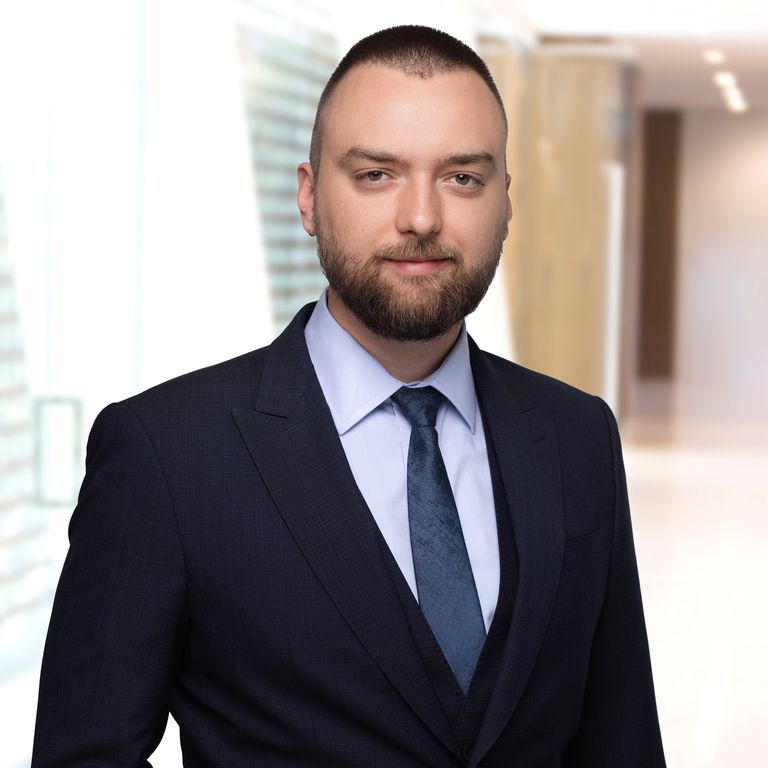
Elton Smole is an intelligence analyst with Steptoe’s Global Strategic Engagement Team, with a focus on international trade, sanctions and geopolitics across North and South America. Elton provides market intelligence and political risk analysis in support of client legal proceedings and strategic advising. He speaks and researches in Spanish and Portuguese (with additional language skills in German and Albanian).
Elton sat down with Stepwise Editor-in-Chief Anni Coonan to discuss his takes on ongoing developments in the Americas:
How has the wave of right-wing victories in recent Latin American elections shifted the course of the region’s politics?
Since the beginning of 2025, Ecuador, Bolivia, Chile, Honduras, Costa Rica, Peru and Colombia have all elected right-wing leaders. The current shift to the right (or “blue tide”) is partially a pendulum swing from the “pink tide” of left-wing momentum going back to the early 2000s. This shift is also inextricable from the growing regional influence of the US under the second Trump administration, which has sought to renew the Monroe Doctrine with the so-called “Trump Corollary.” Under this foreign policy, the US has asserted a strong interest in expanding its power in the Western Hemisphere, which has manifested in new partnerships with likeminded leaders as well as diplomatic feuds with Brazil, Mexico and Canada.
Rising crime has been a driving force behind support for conservative parties in Latin America, with guerilla violence in Colombia most recently contributing to the victory of far-right President Abelardo de la Espriella, whose August 7 inauguration I recently covered. Conservatives like De la Espriella have promised “mano dura” (strong hand) crackdowns on crime and have taken inspiration from El Salvador’s President Nayib Bukele, proposing the construction of mega-prisons in the style of the Salvadorian CECOT facility, one of the largest prisons in the world. The US has expanded security cooperation across the region, targeted transnational trafficking with sanctions on major gangs and cartels and, since September 2025, carried out lethal airstrikes on small boats in the Caribbean and Pacific through Operation Southern Spear.
The next election to watch is in Brazil. Flávio Bolsonaro, the son of former President Jair Bolsonaro (who was convicted of attempting a coup in 2023), is challenging leftist Brazilian President Luiz Inácio Lula da Silva (Lula) in the upcoming October elections. Two Brazilian organized crime groups were designated by the State Department as Foreign Terrorist Organizations (FTOs) in June. The designations, which followed a White House visit by Flávio, are part of his attempt to leverage his ties with Trump and ride the anti-crime “blue tide” to victory in October. However, he is struggling to overcome the political fallout of his entanglement in the Banco Master fraud scandal that I wrote about in June. Recent US tariffs have also given a boost to Lula, who currently leads Flávio Bolsonaro 38% to 31% in first-round polls.
In this shifting geopolitical landscape, what lies in store for Cuba and Venezuela?
This year has been cataclysmic for both countries. The US capture of Nicolás Maduro in January has turned Venezuela from a hostile neighbor into a compliant partner under the leadership of interim President Delcy Rodríguez, who has effectively ceded control of state revenues from most exports to the US. Venezuela promptly reformed its Organic Hydrocarbons Law, opening the oil sector to private foreign investment, although US oil majors hesitated to rush back into Venezuela despite the wishes of the Trump administration. The post-Maduro transition was then upended by the 7.2 and 7.5 earthquakes that I wrote about in July. The US has taken an active role in shaping Venezuela’s political future, including by isolating the Nobel-laurete opposition leader María Corina Machado and instead backing Dinorah Figuera to represent the opposition in talks with the Rodríguez government. The goal of the talks is to eventually call elections. An agreement to reform the Supreme Court and the release of political prisoners are signs of progress, and US-facilitated negations will continue in the coming months.
In my view, the US would like to replicate the Venezuela method in Cuba. In May, the Trump administration indicted former Cuban President Raúl Castro and issued Executive Order 14404, which formed the basis for expanded sanctions that I wrote about in May. Under the US energy blockade, and without oil from its former ally Venezuela, Cuba has experienced rolling blackouts and widespread shortages. The State Department’s July report on Cuban threats to national security and increased CIA activity on the island hint at a potential US attempt to forcibly unseat the regime. However, the ongoing war with Iran, and the lack of a suitable Delcy Rodríguez-like figure in Cuba, point to a continuation of the status quo, for now.
Closer to home, how are US relations with Canada and Mexico evolving?
US relations with Canada and Mexico have been turbulent, to say the least. Canada was one of only two countries to retaliate against US tariffs (the other being China), kicking off an ongoing trade dispute. Tensions continued to flare after Canadian Prime Minister Mark Carney’s January speech at Davos, in which he called for “middle powers” to band together amid the rupture in the rules-based international order. In response to Canada’s retaliation against US tariffs, Trump has threatened 50% tariffs on $20 billion in US imports from Canada. These were set to take effect on August 18, in what would have been the first use of authorities under Section 338 of the Tariff Act of 1930, but Trump announced an eleventh-hour extension just before the deadline. It remains to be seen if a lasting agreement will be reached…keep an eye out for my deep dive on this next Wednesday.
USMCA negotiations are also ongoing after, as I wrote in July, the US, Canada and Mexico failed to renew the North American trade agreement by the July 1 deadline. Mexico has been more proactive than Canada in trade talks with the Trump administration but has also been navigating a diplomatic dispute over security cooperation. In April, two CIA agents were killed in a joint operation with Chihuahua state officials during an unauthorized raid on a drug lab. Mexican President Claudia Sheinbaum claimed to have no knowledge of the operation, framing the incident as a violation of national sovereignty. The US has since indicted members of Sheinbaum’s Morena party, provoking Sheinbaum to shift her once-cooperative posture towards the Trump administration to one of defiance. Still, the US and Mexico have continued to engage in security cooperation, including a recent agreement allowing Mexico to procure US drones to fight cartels.
How has Latin America emerged as a key theater in the geopolitical competition between the US and China?
I would describe this as a delicate balancing act for Latin American leaders seeking to align with the US on security while maintaining economic ties with China. For example, Ecuadorian President Daniel Noboa is in China this week negotiating trade and energy investments, while USSOUTHCOM Commander General Francis L. Donovan is visiting Ecuador to strengthen joint military operations. More than a dozen Latin American countries have joined the US-led Shield of the Americas coalition since March 7, 2026, which is also known as the Americas Counter Cartel Coalition (A3C). Many of these same nations are also members of China’s Belt and Road Initiative (BRI). Chinese firms hold mining interests across the region for critical mineral extraction, and energy infrastructure is dominated by Chinese state-owned enterprises in countries like Peru and Chile.
This tension has recently played out as the US seeks to leverage its political capital to push back on Chinese infrastructure projects in the region. Examples include a now-stalled undersea cable project from Chile to Hong Kong, a semi-completed space telescope in the Argentine Andes, and the majority Chinese-owned Chancay port in Peru, where a Peruvian court recently granted regulators oversight, following US concerns over regional security. Latin American leaders are seeking to assuage major US concerns while continuing to maintain economic relationships with China, which currently ranks as South America’s top trading partner.
Are there any other interesting developments in the region that are getting less attention than they deserve?
There’s a lot happening in Latin America these days, and so I’m usually spoiled for interesting topics to write about. I think Guyana is a country worth following, where the country’s oil boom has made it the world’s largest per capita oil producer. Guyana’s oil production is approaching Venezuela’s output in barrels per day, and its GDP per capita (PPP) has surpassed that of the US.
Bolivia has also been on my radar, where conservative President Rodrigo Paz has weathered his first major test in office: nationwide roadblocks by the opposition that paralyzed the country for months. After declaring a state of emergency, he deployed security forces that cleared the blockades. He is now seeking to push a new Investment Law through Congress and secure a $1.9 billion financing program from the IMF.
Finally, this year’s “Super El Niño” is expected to subdue hurricane season in the Atlantic but has caused widespread drought across much of Latin America. The Panama Canal has already had to lower maximum ship draft limits, reducing the canal’s capacity and raising fees. Meanwhile, Mexico is moving forward with a “dry canal” connecting the Atlantic and Pacific Oceans with a railway across the Isthmus of Tehuantepec, as an alternative shipping route.
Follow us on Substack for more stories to come.